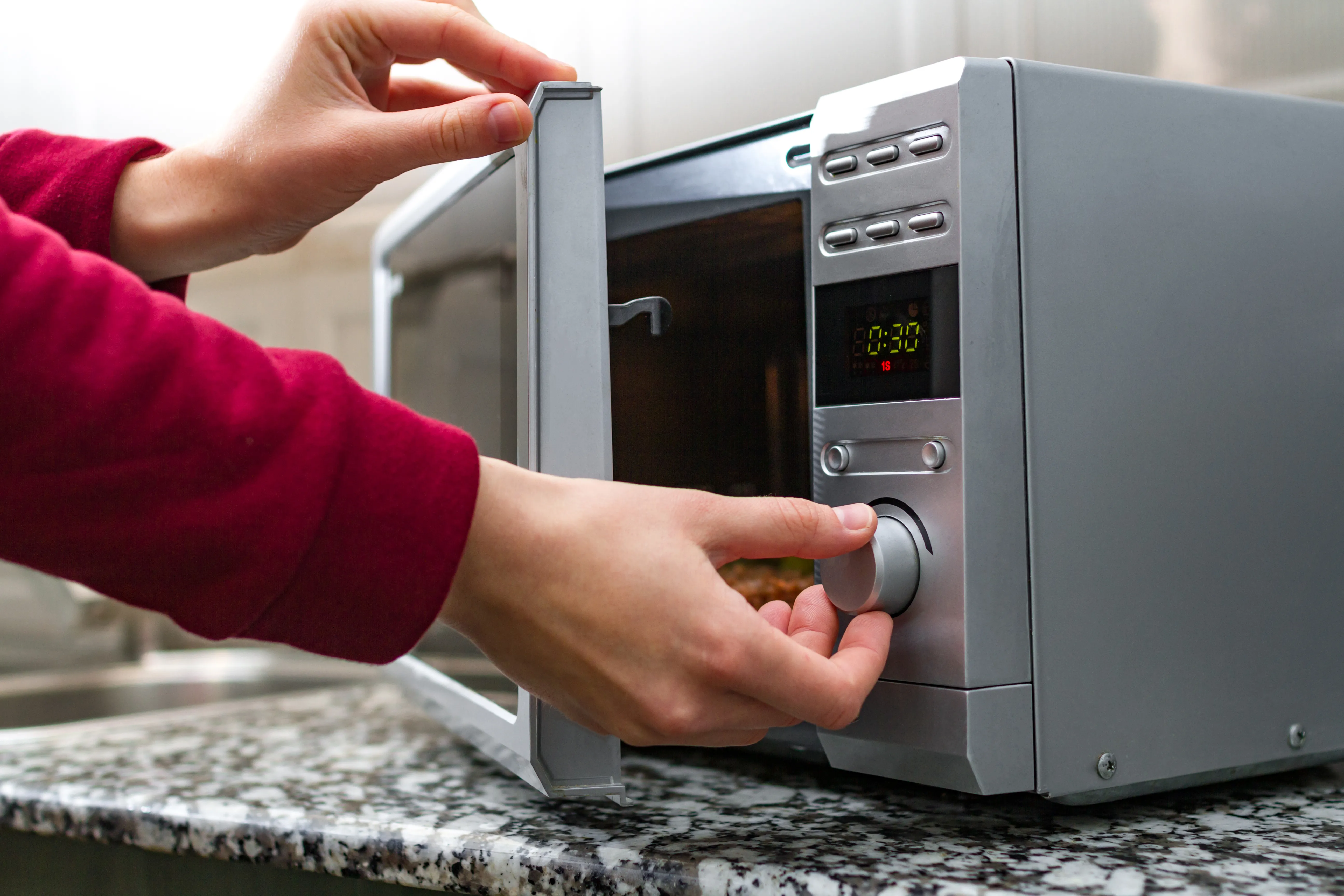


You put yesterday’s leftovers in the microwave, press Start, and wait for that familiar humming sound. Except nothing happens. The display might be completely dark, the buttons might refuse to respond, or the microwave runs like normal but leaves your food cold.
Sound familiar?
When your microwave stopped working, it’s easy to assume the entire appliance is broken. After all, something you use almost every day suddenly can’t perform its most basic job.
But here’s the thing: not every microwave problem means you need a replacement. Sometimes, the issue is as simple as an interrupted power supply, an activated control lock, or a door that hasn’t closed properly. Other times, the problem involves an internal component that requires professional attention.
The challenge is knowing the difference.
In this guide, we’ll walk through seven common reasons microwaves stop working, explain which checks you can safely perform at home, and help you decide when professional repair makes sense.
Microwave Stopped Working? Start by Identifying the Symptoms
Before looking for the cause, pay attention to what your microwave is actually doing.
A microwave with a completely blank display has a different set of possible problems from one that turns on but doesn’t heat food.
For example, if the appliance has no lights, no display, and no sound, the problem may involve its electrical supply.
However, if the display works and the timer counts down normally, you might be dealing with a control setting, door-related problem, or internal heating failure.
Here are some common symptoms and what they might indicate.
Microwave Symptom | Possible Cause |
Completely dead, no display | Power supply, breaker, internal fuse, or control failure |
Display works but won’t start | Control lock, door closure, or control problem |
Runs but doesn’t heat | Incorrect settings or internal heating-system fault |
Shuts off during cooking | Overheating, ventilation, or electrical issue |
Makes unusual buzzing or clicking | Fan, electrical, or heating-system problem |
Sparks or produces a burning smell | Incompatible cookware, damaged interior, or electrical fault |
Stops working after a power outage | Interrupted power, control malfunction, or electrical damage |
These symptoms are clues, not a confirmed diagnosis.
Still, understanding them can help you avoid unnecessary troubleshooting and explain the problem more clearly if you need a technician.
7 Common Reasons Your Microwave Suddenly Stopped Working
Microwaves contain several electrical and mechanical systems that have to operate correctly for the appliance to heat food.
Some problems involve external conditions you can check without tools. Others require specialized testing.
Let’s start with the simpler possibilities.
1. The Microwave Isn’t Receiving Power
If your microwave is completely unresponsive, check the power supply first.
It’s possible that the appliance itself isn’t the problem.
A loose plug, a tripped circuit breaker, or an outlet that has stopped working can make a functioning microwave appear broken.
According to GE Appliances’ microwave troubleshooting guidance, checking the household breaker and confirming that the electrical outlet works are appropriate first steps when a microwave loses power.
What you can safely check:
- Confirm the power cord is securely plugged in, if accessible.
- Check whether other kitchen appliances have power.
- Inspect the relevant circuit breaker for a trip.
- If the outlet is easily accessible, test it with a known-working small appliance.
- Check for a tripped GFCI outlet where applicable.
If the breaker trips again after being reset, stop using that circuit and consult a qualified electrician.
Also, avoid plugging a microwave into an extension cord or an improvised power setup.
The U.S. Fire Administration recommends connecting microwave ovens directly to suitable wall outlets rather than extension cords.
If electricity is reaching the outlet but the microwave still shows no signs of life, an internal fault may be responsible.
2. The Microwave Door Isn’t Closing Properly
Here’s something that can easily go unnoticed: a microwave door that looks closed may not actually be engaging its safety mechanism.
Microwave ovens have door interlock systems designed to prevent operation when the door is open.
According to the U.S. Food and Drug Administration (FDA), microwave ovens must have at least two independent safety interlock systems that stop microwave generation when the door opens.
So, if your microwave display works but the appliance refuses to start, the door is worth checking.
First, make sure no food container or packaging is blocking the door.
Next, inspect the accessible latch area for visible debris.
If everything looks normal, gently close the door as you usually would.
Don’t slam it or attempt to force the latch into position.
If the door is bent, damaged, misaligned, or won’t close securely, stop using the microwave.
A damaged latch or interlock mechanism requires professional attention. Never bypass a microwave’s door safety system.
3. The Control Lock or Timer Is Activated
Sometimes, the microwave isn’t broken at all. It’s simply responding to a setting you didn’t realize was turned on.
Many newer microwaves include a Child Lock or Control Lock feature.
When activated, this feature prevents the appliance from starting or responding to certain buttons.
Depending on the model, you might see messages such as:
- LOC
- LOCK
- L
- A padlock symbol
The exact display varies by manufacturer.
Another possibility is that you’ve accidentally selected the kitchen timer instead of a cooking function.
The timer can count down without activating the microwave’s heating system.
Whirlpool’s microwave troubleshooting instructions identify the Control Lock, timer settings, and door closure as items to check when a microwave doesn’t start.
What you can do:
Look at your microwave’s display and check the owner’s manual for instructions on disabling the control lock.
Then, cancel any active timer or unfinished cooking program.
If the buttons still don’t respond, follow the manufacturer’s recommended reset procedure, if available.
When basic settings aren’t the cause, a control panel or electronic component may need inspection.
4. The Microwave Overheated and Shut Down
Have you noticed that your microwave works for a while, then suddenly shuts off?
Perhaps it happens after several minutes of cooking, or when you’re reheating multiple dishes back-to-back.
One possible explanation is overheating.
Microwaves need ventilation to release heat generated by their internal components.
If the ventilation openings are blocked or the installation doesn’t provide enough clearance, temperatures inside the appliance can rise.
In fact, GE Appliances explains that microwaves may shut down because of overheating caused by extended cooking or inadequate airflow.
Its troubleshooting guidance suggests checking ventilation and allowing approximately 30 minutes to see whether power returns after a suspected overheating shutdown.
However, that recommendation applies to certain overheating situations and doesn’t mean every shutdown can be solved by waiting.
What you should check:
- Are the microwave’s ventilation openings blocked?
- Is the appliance surrounded by objects that restrict airflow?
- Does its installation meet the manufacturer’s clearance requirements?
- Does it repeatedly shut down during normal cooking?
For built-in and over-the-range microwaves, avoid repositioning or dismantling the appliance without following the manufacturer’s instructions.
If the microwave repeatedly shuts off, produces a burning smell, or becomes unusually hot, stop using it and arrange a professional assessment.
5. An Internal Fuse or Thermal Protection Component Failed
A microwave that suddenly loses all power may have an internal electrical fault.
Among the possible components are protective fuses and thermal protection devices.
These components can interrupt operation when certain electrical or temperature conditions occur.
However, a failed protective component may be a symptom of another problem rather than the original cause.
For example, replacing a fuse without diagnosing why it failed may leave an electrical fault unresolved.
This is where DIY troubleshooting should stop.
Microwave ovens contain high-voltage components that can remain dangerous even after the power cord has been disconnected.
According to GE Appliances’ repair safety guidance, internal capacitors can retain dangerous electrical charges after the appliance is unplugged.
For this reason, don’t remove the outer cabinet, test internal fuses, or attempt electrical repairs yourself.
A qualified appliance technician can determine whether the protective component failed and identify any underlying problem.
6. The Microwave Runs but Doesn’t Heat Food
This is probably one of the most confusing microwave problems.
The interior light turns on. The turntable rotates. The timer counts down. You might even hear the usual humming noise.
But when the cooking cycle finishes, your food is still cold.
If this happens, begin by confirming that you selected a cooking function rather than the kitchen timer.
Also, check the power setting. A microwave operating at a reduced cooking power may take longer to heat food.
However, if the settings are correct and the appliance consistently fails to heat, an internal heating-system problem becomes more likely.
A microwave generates the energy used for heating through a component called a magnetron.
Problems involving the magnetron, its power-supply circuitry, or associated controls can prevent proper heating.
These faults require professional diagnosis.
How to Check Whether Your Microwave Is Heating
If the microwave has no safety warnings, visible damage, sparks, or unusual odors, you can perform the simple heating check recommended by Whirlpool.
- Place approximately 250 mL (1 cup) of water in a microwave-safe cup.
- Put the cup on the turntable.
- Select the normal microwave cooking function at full power.
- Run the microwave for one minute, following the manufacturer’s instructions.
- Carefully check whether the water has become warmer.
Whirlpool’s official guidance uses this method to help determine whether a microwave is producing heat.
Be careful when handling the cup because heated water and containers can cause burns.
The FDA also warns that excessively heated water can become superheated. Don’t extend the test unnecessarily.
If the water remains cold, stop testing and arrange professional assistance.
7. The Electronic Control Board or Keypad Is Malfunctioning
Modern microwave ovens rely on electronic controls to manage cooking settings, timers, safety functions, and other operations.
When those controls fail, the microwave may respond unpredictably.
For example, you might notice that certain buttons don’t work, cooking programs stop unexpectedly, or the display shows unusual error codes.
Sometimes, a temporary electronic glitch can be resolved using the manufacturer’s reset procedure.
However, repeated control failures may indicate a damaged keypad, malfunctioning control board, or another electrical issue.
A technician can evaluate the problem and determine whether repairing the appliance makes financial sense.
Replacing a control board based on symptoms alone isn’t recommended because several different faults can produce similar behavior.
What to Do When Your Microwave Stops Working: A Safe Troubleshooting Checklist
Before scheduling an appliance repair appointment, it helps to rule out the basic problems that don’t require opening the microwave.
Here’s a quick checklist.
Step 1: Check the power source. Confirm that the microwave is connected to a functioning outlet and that the circuit breaker hasn’t tripped.
Step 2: Check the door. Make sure the door closes normally and that nothing is blocking it. Stop if you notice damage.
Step 3: Review the control settings. Check for Child Lock, Control Lock, an active timer, or an incorrect cooking mode.
Step 4: Look for blocked ventilation. Make sure accessible vents aren’t obstructed and that the microwave meets the manufacturer’s installation requirements.
Step 5: Follow the recommended reset procedure. If the microwave is otherwise safe and the manufacturer’s manual recommends a reset, follow those instructions.
Step 6: Test the heating function only when safe. Use the manufacturer’s short water-heating test if the microwave operates normally but seems unable to heat food.
Step 7: Stop if the problem continues. Don’t repeatedly restart a malfunctioning microwave or open its housing to inspect electrical components.
These checks may reveal a straightforward issue. However, if your microwave remains unresponsive, repeatedly shuts down, or fails to heat, the next step is professional diagnosis.
Why You Should Never Open a Microwave to Repair It Yourself
Searching online for microwave repair tutorials can make internal repairs seem straightforward.
You might find videos showing people removing the cabinet, testing a fuse, or replacing a component.
However, microwave repair is different from many ordinary household maintenance tasks.
GE Appliances explicitly advises against DIY microwave repairs because internal high-voltage capacitors can retain an electrical charge even after the appliance is disconnected.
Microwaves also have safety interlock systems that must function correctly to prevent operation when the door is open.
According to the FDA, microwave ovens are subject to federal safety requirements under 21 CFR 1030.10.
The FDA has regulated microwave oven manufacturing since 1971, including requirements covering microwave emissions and safety mechanisms.
The agency also advises against using a microwave with damaged door hinges, latches, or seals.
For homeowners, the practical rule is simple:
You can check the outlet, settings, door closure, and accessible ventilation. Leave internal electrical repairs to qualified professionals.
If your microwave produces sparks, smoke, a burning smell, or operates with the door open, discontinue use immediately.
For a microwave fire, turn the appliance off if safe, keep the door closed, and call emergency services when necessary. Never open the door while a fire is burning inside.
Microwave Stopped Working After a Power Outage? Here’s What to Know
Florida homeowners are familiar with sudden electrical interruptions, particularly during severe weather.
If your microwave stopped working after a power outage, the first thing to determine is whether the appliance is receiving stable electricity.
Check the relevant breaker and verify that the outlet works.
If the display has power but the controls aren’t responding, consult the manufacturer’s reset instructions.
However, an appliance that repeatedly trips the circuit breaker or shows signs of electrical damage should not be used.
The Federal Emergency Management Agency (FEMA) recommends disconnecting appliances and electronic equipment during outages to reduce the risk of damage from electrical surges.
For Florida households, this is another reason to pay attention to appliance performance after storms.
Not every post-outage failure is caused by a surge, though. A technician or electrician may need to determine whether the problem lies with the appliance or the electrical supply.
How to Tell if Your Microwave Is Worth Repairing
Once your microwave stops working, another question usually follows: should you pay for repair or simply buy a replacement?
The answer depends on the type of microwave, its age, the nature of the problem, and the estimated repair cost.
A small countertop microwave may be relatively inexpensive to replace.
On the other hand, a built-in or over-the-range microwave may involve additional installation considerations, making repair a more attractive option.
Repair may be worth considering when:
- The microwave has been reliable until recently.
- The problem involves a replaceable component.
- The appliance is relatively new or remains under warranty.
- Suitable replacement parts are available.
- The estimated repair cost is substantially below replacement.
Replacement may make more sense when:
- The appliance has experienced repeated major failures.
- The cabinet or door assembly has serious damage.
- The required repair is expensive compared with a new unit.
- Replacement parts are no longer available.
- The microwave has significant wear or no longer meets your needs.
For example, imagine your built-in microwave suddenly stops responding.
If the problem turns out to be a repairable control component, fixing it may be more practical than buying another unit and arranging installation.
However, if an older countertop microwave needs extensive internal work, replacement may be the more economical choice.
Instead of relying on a universal repair-versus-replacement rule, compare the actual repair estimate with the total cost of an appropriate replacement.
What Happens if You Keep Using a Microwave That Isn’t Heating Properly?
A microwave that struggles to heat food can be inconvenient, but it also creates a food safety concern.
If the appliance doesn’t heat evenly or reliably, your food may not reach a safe temperature.
For example, you might reheat leftover chicken, find that the outside feels warm, and assume the meal is ready.
But the center may still be too cold.
According to the U.S. Department of Agriculture (USDA), leftovers should generally be reheated to an internal temperature of 165°F (74°C).
The USDA recommends stirring or rotating food during microwave reheating, allowing standing time, and checking the temperature in several places.
If your microwave is no longer heating reliably, stop using it to prepare or reheat food.
Instead, use a properly functioning oven, stovetop, or another suitable cooking appliance.
This is particularly important for households preparing meals for young children, older adults, or anyone at higher risk of foodborne illness.
Remember, food feeling warm on the outside doesn’t automatically mean it’s been heated safely throughout.
Simple Habits That Can Help Prevent Microwave Problems
No appliance lasts forever, but everyday care can help you notice problems early and reduce avoidable wear.
Fortunately, microwave maintenance doesn’t require a complicated schedule.
Keep the interior clean. Food splatters and grease can accumulate on the microwave’s internal surfaces. Wipe them away using a soft cloth and a mild cleaner approved by the manufacturer.
Use microwave-safe containers. Avoid cookware and packaging that aren’t approved for microwave use.
Don’t block the vents. Follow the installation and ventilation requirements in your owner’s manual.
Close the door gently. Avoid slamming the door or putting unnecessary pressure on the latch.
Never operate the microwave empty unless the manufacturer specifically permits it. Doing so can damage certain models.
Pay attention to unusual behavior. Repeated shutdowns, burning smells, sparking, or changes in heating performance deserve attention.
Check the power connection. Use an appropriate grounded outlet and avoid extension cords.
These practices won’t prevent every electrical failure. However, they can help reduce some avoidable problems and make changes in the appliance’s performance easier to recognize.
When Should You Contact a Professional Appliance Repair Technician?
Sometimes, basic troubleshooting resolves the issue. Other times, the microwave clearly needs professional attention.
Consider requesting service when:
- The microwave has power but won’t start.
- Food remains cold despite the correct cooking settings.
- The appliance repeatedly shuts down.
- The display or keypad stops responding consistently.
- You hear persistent unusual electrical or mechanical noises.
- The microwave repeatedly trips a breaker.
- Basic troubleshooting doesn’t resolve the problem.
For suspected door damage, sparking, smoke, or burning smells, stop using the microwave and follow appropriate safety precautions rather than continuing troubleshooting.
Before contacting a repair provider, have the brand, model number, approximate age, and a description of the problem ready.
If the microwave displays an error code, record that information too.
A clear description of the symptoms can help the technician understand the issue and determine the appropriate next step.
Looking for Professional Appliance Repair? Contact Fixgenix
A broken microwave can interrupt your daily routine, particularly when you’re trying to prepare meals between work, school, and other responsibilities.
While some problems can be identified through basic troubleshooting, internal electrical and heating-system faults require qualified attention.
If you need help evaluating an appliance problem, Fixgenix is a Florida-based residential and commercial appliance repair company.
Fixgenix focuses on professional diagnosis, clear repair recommendations, and helping customers make informed decisions about their appliances.
The company serves homeowners and businesses across its Florida service region and offers support for a range of kitchen and household equipment.
For microwave-specific problems, contact Fixgenix with your brand and model number to confirm whether that equipment is supported.
The team can help you understand the available service options and the next appropriate step.
If your microwave has stopped working, remember that a diagnosis can help determine whether repair is reasonable or replacement is the better investment.
Frequently Asked Questions
Why did my microwave suddenly stop working?
A sudden microwave failure can result from a tripped circuit breaker, a faulty outlet, an activated control lock, overheating, or an internal component problem.
Start with the power supply and basic settings. If the appliance remains unresponsive, professional inspection may be necessary.
Why does my microwave have power but won’t start?
If the display works but the microwave doesn’t start, check whether Control Lock is activated, the kitchen timer is selected, or the door isn’t closing properly.
If these aren’t the cause, an internal control or safety interlock fault may be responsible.
Why is my microwave running but not heating food?
Possible causes include incorrect cooking settings or problems with the microwave’s internal heating system.
If the manufacturer’s recommended heating test confirms that the appliance isn’t producing heat, stop using it and arrange professional diagnosis.
Can a microwave stop working because of overheating?
Yes. Depending on the model, overheating can trigger protective components that interrupt operation.
Blocked ventilation or extended operating periods may contribute to overheating.
Repeated shutdowns should be investigated rather than ignored.
Can I reset a microwave that stopped working?
Some microwave problems may respond to the reset procedure described in the owner’s manual.
However, a reset won’t repair failed electrical components or damaged safety systems.
If the problem returns, stop repeatedly resetting the appliance and seek professional assistance.
Is it safe to replace a microwave fuse myself?
No. Internal microwave repairs can expose you to dangerous electrical components.
A high-voltage capacitor may retain a hazardous charge even after the appliance has been unplugged.
Internal fuse diagnosis and replacement should be handled by appropriately qualified technicians.
How long should a microwave last?
Microwave lifespan varies according to model quality, frequency of use, installation conditions, and maintenance.
Rather than relying on age alone, consider the appliance’s condition, history of repairs, and the cost of fixing its current problem.
Is it better to repair or replace a microwave?
Repair can make sense when the appliance is in good condition and the repair cost is reasonable.
Replacement may be preferable when the microwave has extensive damage, repeated failures, unavailable parts, or a repair estimate close to the cost of a new unit.
What should I do if my microwave starts sparking?
Stop the cooking cycle immediately if safe.
If there is a fire inside, keep the door closed, turn off the appliance if safe, and contact emergency services as needed.
Don’t continue using a microwave that repeatedly sparks or has visible internal damage.
Can a microwave be repaired after a power outage?
Sometimes. The problem may involve the electrical supply, electronic controls, or another repairable component.
However, a power outage can coincide with different types of failure.
Check the outlet and breaker first. If the microwave still won’t operate normally, request professional advice.
Final Thoughts: Don’t Replace Your Microwave Before Finding the Cause
When your microwave stops working, it’s tempting to assume you need to buy a new one immediately.
But a completely dead display, an unresponsive control panel, and a microwave that runs without heating are different problems with different potential causes.
Start with the basics. Check the power connection, confirm the door closes properly, review the controls, and follow the manufacturer’s troubleshooting instructions.
If the problem involves an internal electrical component, overheating, or a damaged safety system, leave the repair work to a qualified professional.
Most importantly, never take apart a microwave to investigate a problem yourself.
If you’ve completed the safe checks and your microwave still isn’t working, contacting an appliance repair provider can help you make a more informed decision.
Need Help With an Appliance That Stopped Working?
Contact Fixgenix to discuss your equipment problem, confirm microwave service availability, and ask about the next steps.
Call Fixgenix: (888) 230-2021
Website: www.fixgenix.com
Contact Fixgenix for Appliance Repair
Getting the right diagnosis can save you from unnecessary guesswork and help you choose the most practical solution for your kitchen.